It’s Thursday night and you’re scrolling the group text again. Who’s on sound this Sunday? Who actually confirmed? And why is it always the same five people saying yes? There’s a calmer way.
It’s not just your Thursday nights. The chase has a price, and your team is paying it too.
“Are you still good for Sunday?” — sent one person at a time, every single week.
Nobody at the soundboard at 8:45. You find out when the seat is empty — not before.
Saturday-night calls that start with “I’m so sorry to do this to you again…”
The same people carry every week — until one day they quietly stop volunteering at all.
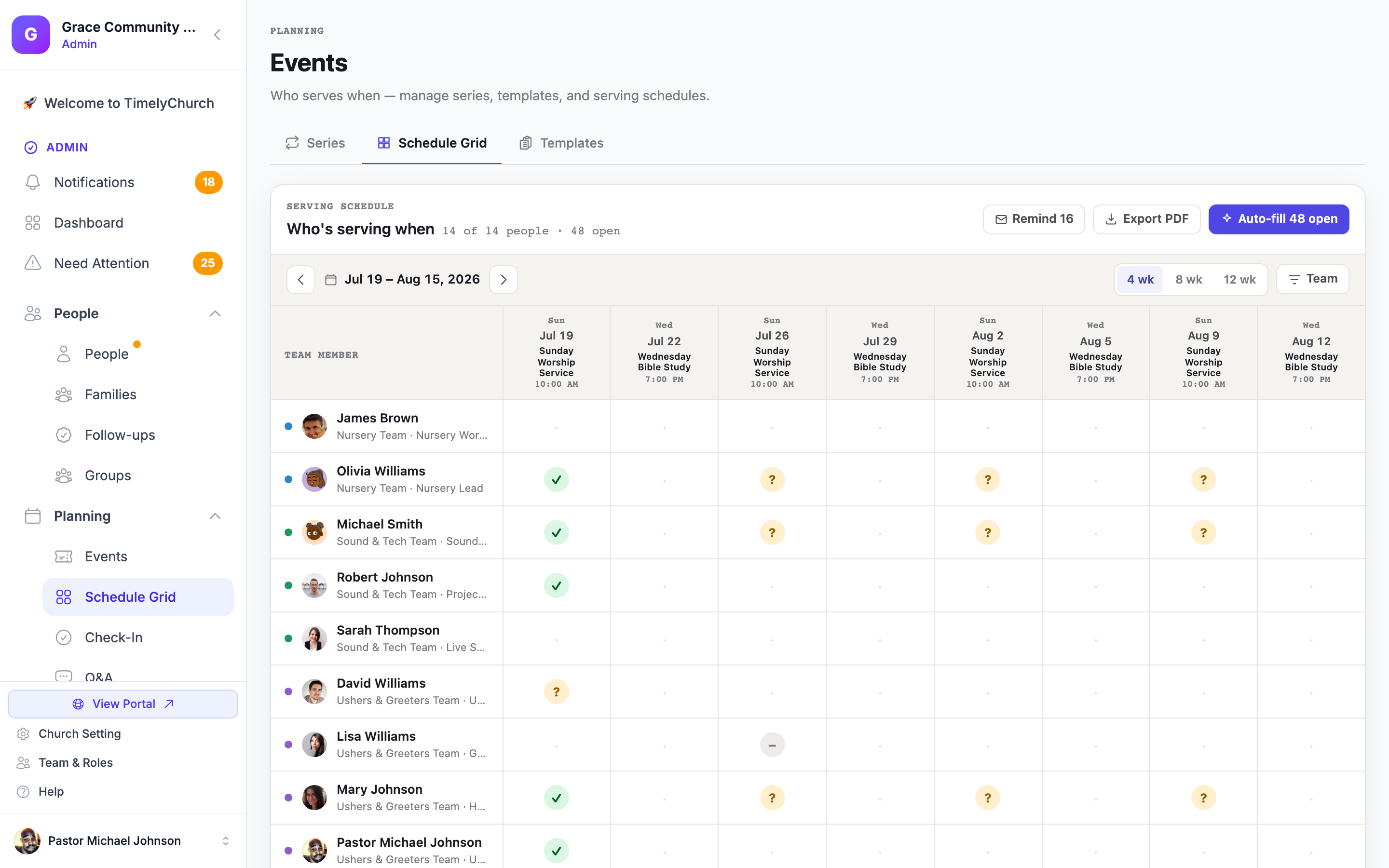
You open one screen. Every serving slot for the month is right there — every team, every Sunday. Confirmed slots are settled. Open ones are obvious. Nothing surprises you on Sunday morning, because you saw it all on Thursday.
Whether you are the whole scheduling department or you coordinate ten teams — the grid works the same way.
One grid, a fair rotation, and volunteers who answer with a single tap.
The Schedule Grid — the one in the screenshot above — lays out every serving slot across the coming weeks: every team, every position, side by side. Each cell shows its status at a glance, so gaps stand out before they become Sunday-morning surprises and you fix them on your schedule, not in a panic.
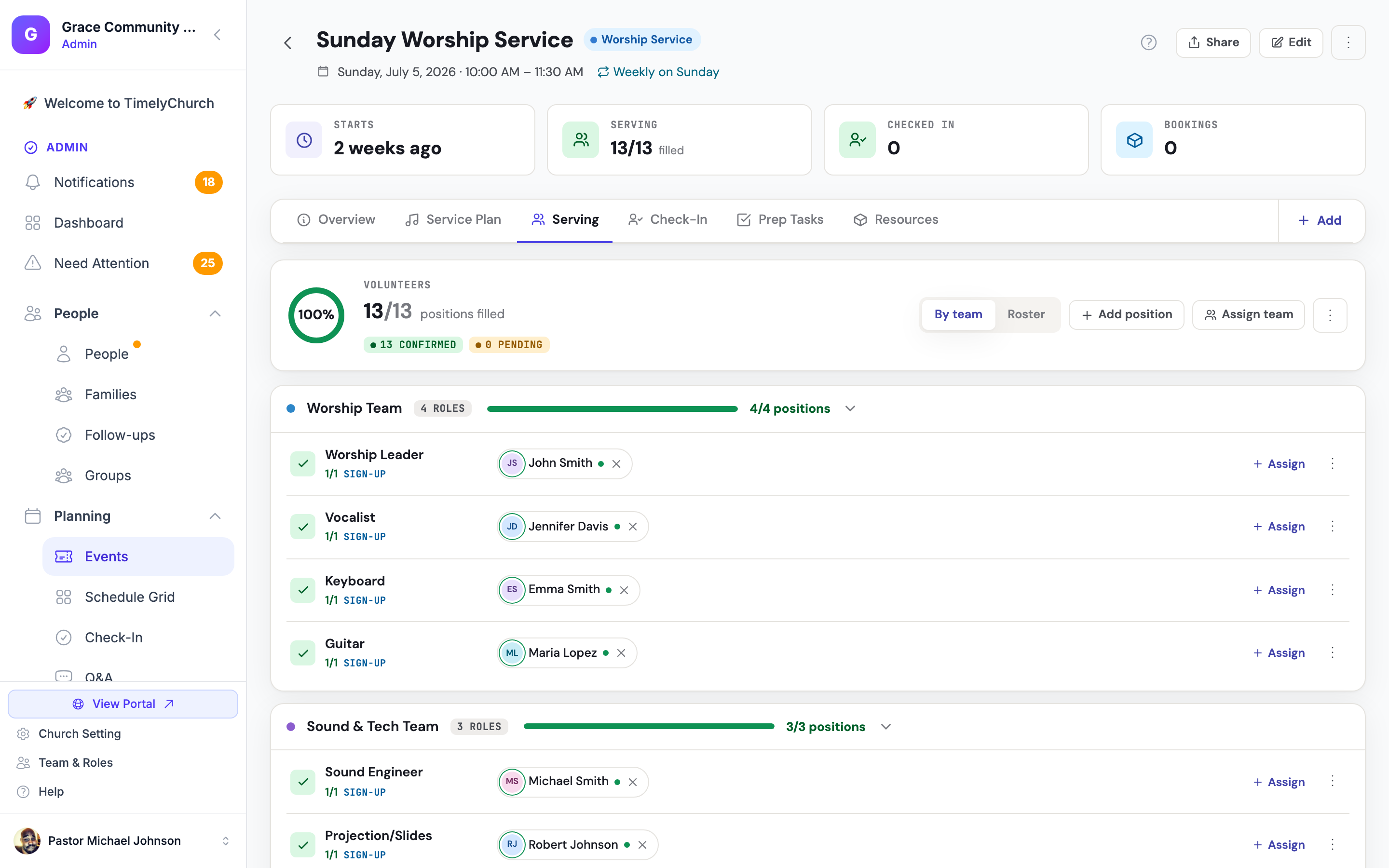
One click fills the open slots from your team roster — and it fills them fairly. Auto-fill spreads serving evenly instead of leaning on whoever said yes last time, so the load stops landing on the same faithful few. This is what it builds: a Sunday with every position covered, 13 of 13.
When someone is scheduled, the ask goes straight to their Telegram — the chat app already on their phone. They tap Yes, No, or Snooze, and the answer flows back into the grid on its own. No group text. No “did you see my message?” Volunteers without Telegram can accept or decline from a link in their email instead.
How the round trip works
The ask lands in Telegram
“You’re scheduled for Sound on Sunday, June 14. Can you serve?”
One tap: Yes / No / Snooze
No app to install, no login to remember — just an answer.
The grid updates itself
The cell flips to ✓ or ✗ — and a declined slot can be offered to the next eligible teammate automatically.
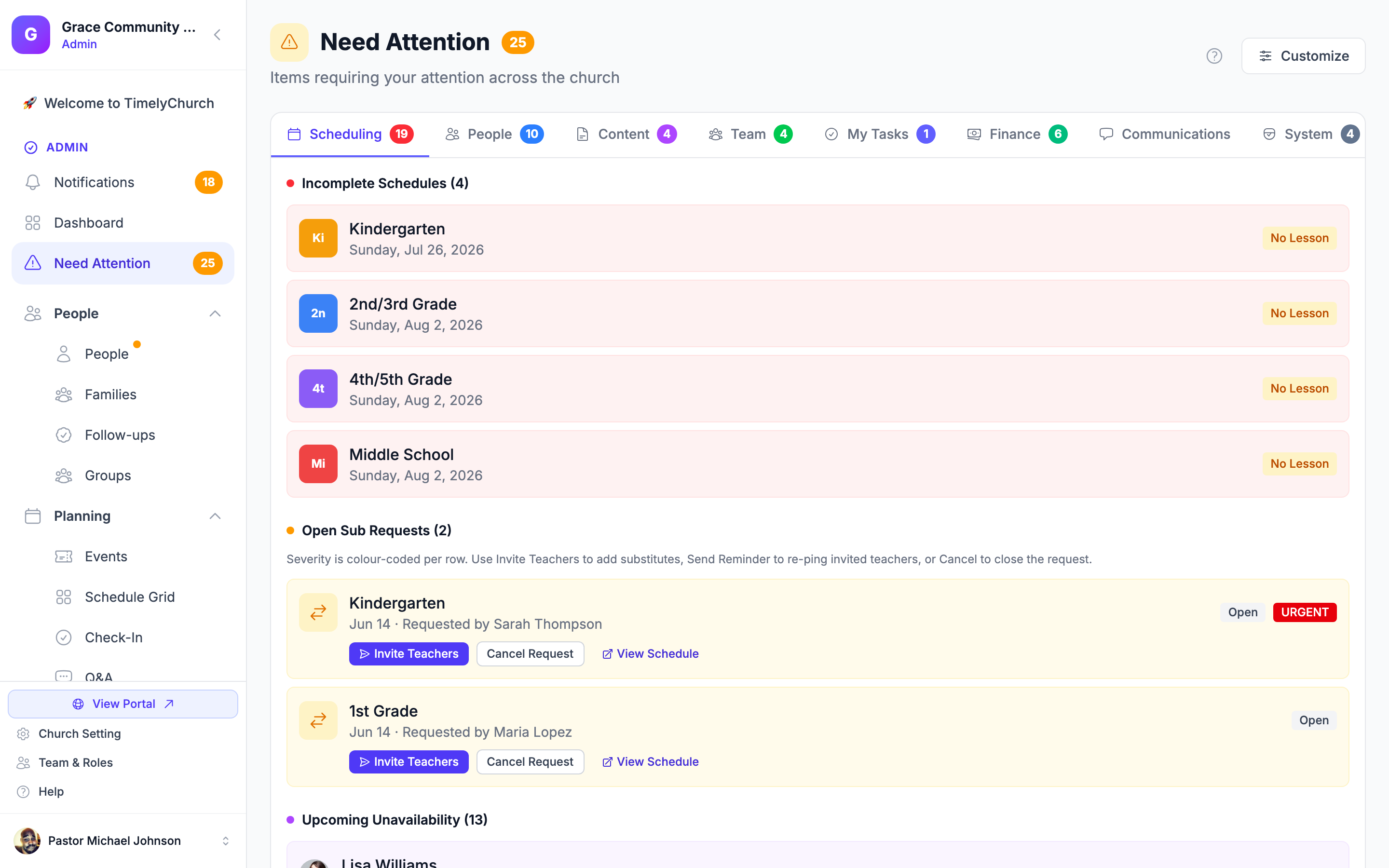
Volunteers mark the dates they’re away, so they never get scheduled over a vacation in the first place. When something comes up after they’re scheduled, they request a sub themselves — and the open slot is offered to eligible teammates. Your “needs attention” view is the radar: everything unresolved in the next 30 days, on one screen, instead of buried in your inbox.
Build your standard Sunday once — every team, every position — then apply it to a whole quarter in one go. Stop rebuilding the same schedule from scratch every month.
Some of your team lives on paper — and that’s fine. Print the schedule or save it as a PDF for the bulletin board, so everyone sees the same plan either way.
Volunteers get reminded automatically before they serve, in your church’s local time — so “I forgot” stops being a Sunday-morning surprise.
This is the actual Schedule Grid — a real screenshot from TimelyChurch, not a mockup. Every capability on this page is in the product today.
Scheduling comes with the rest of TimelyChurch — people, teams, events, check-in, and more — so nothing lives in a separate tool. See plans & pricing →
Set up your teams, open the grid, and let this Sunday fill itself. Start free — no card required.