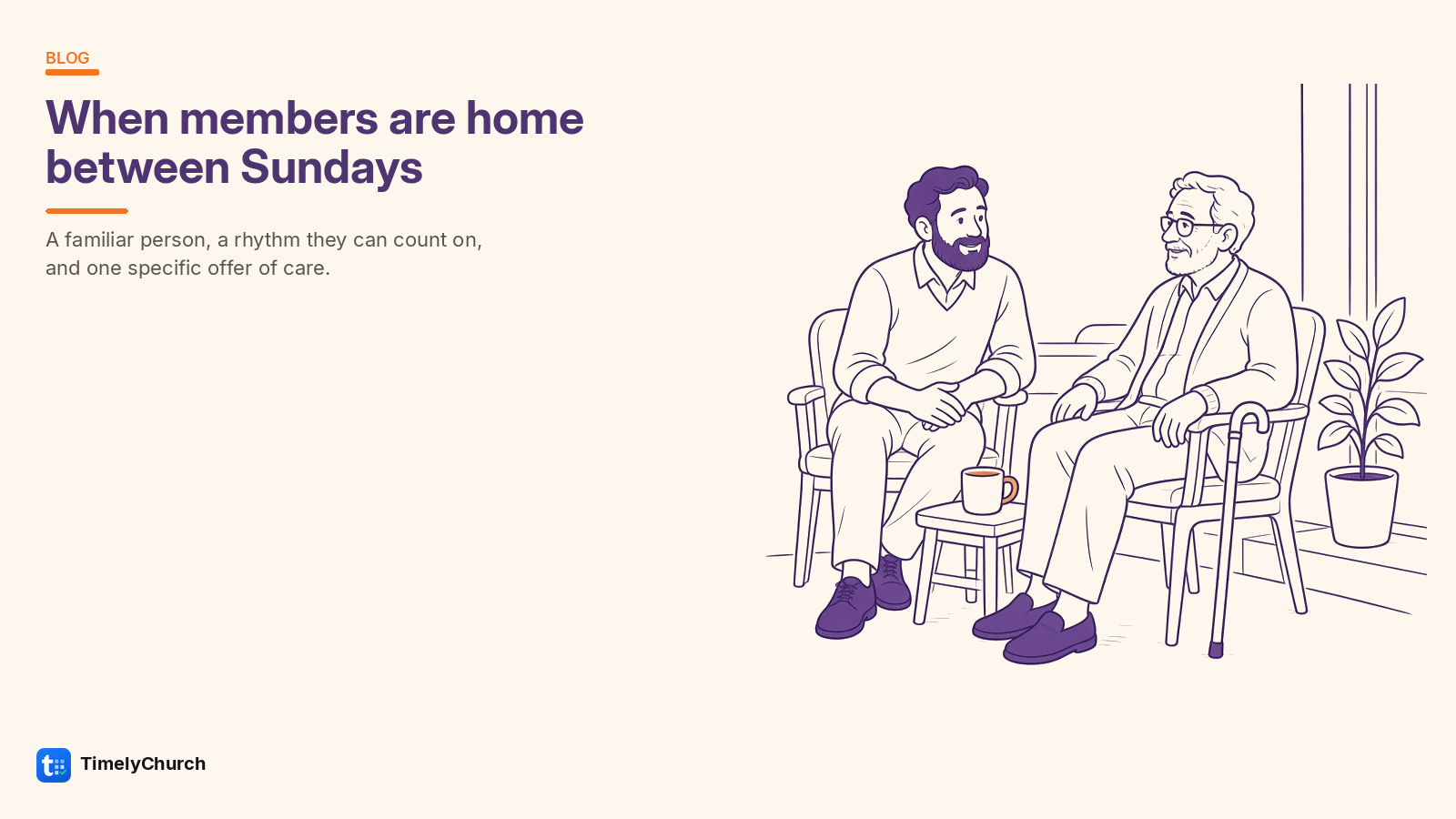
Picture an older member who used to sit in the same pew. They stopped driving. Sunday comes, the seat is empty, and the questions are simple. Will someone call this week? Do they want a visit, a ride, or a quiet week? If the person who always remembered them is away, who else knows?
For a pastor, or for the volunteer who carries this care, those questions sit beside the sermon, a hospital visit already on the calendar, and a week that is already full. The care is real. Remembering is the part that slips.
Helping people stay connected when they cannot get to church takes relationships and follow-through a small team can keep. A clear plan gives leaders room to listen, pray, and show up. Here are four habits a small church can put into practice this week.
These habits are for members who are home: an older person who stopped driving, someone recovering after illness or surgery, a person for whom a full Sunday is too much. A first-time guest needs a welcome of their own. Start here with the people who are already part of the church and cannot be in the room.
1. Make sure each person has a familiar leader
Start with a question for your team: Who knows how this person is doing at home?
Look through the people who are absent because getting to church is hard. Include older members who no longer drive, people recovering at home, and anyone whose health makes a full Sunday too much. Agree which leader will stay in touch with each person, learn what this season looks like, and follow through on what was promised. Keep those relationships steady, and name another leader who can step in when the first one is away.
The next conversation can be simple: “How has this week been at home?” or “Is there something you would like us to pray about?” Leave room for a short answer, a longer story, or a request to call another day.
Ask who else should hear from the church. A spouse or an adult child is sometimes the right person to reach. Agree on that with the member, and tell them who will call. Use the channels your church already approves. Keep health details with the people providing the care. A wide group message is a poor place for those details.
People still belong to the church when they are home. Some will want a ride when they are ready to return. Some are home for a long season. Ask which one this is before you plan for them.
Try this week: identify one person whose week nobody on the team could describe. Decide who will call, and who will cover that call if the first leader is away.
2. Agree on a rhythm they can expect
A person at home should know when they will hear from you. Choose a rhythm your team can keep: a weekly phone call, a monthly visit, a printed bulletin or large-print note, a standing offer of a ride.
Say it plainly, so they are not left wondering whether the church forgot:
Would it be all right if I called you on Tuesday afternoons? Some weeks a short visit may suit you better, and we can plan that. If you would rather we wait, please tell me.
When they want to attend, give the same practical details you would give anyone else: the time, the door, who will meet them, and how they will get home. People who are off the church’s text thread still need the plan. A phone call or a printed note can carry it.
A promised Tuesday call that goes missing is a hard silence for someone waiting at home. If the week gets away from you, say so and name the next time you will be in touch.
Try this week: choose the rhythm for one person and tell them what it is. Ask whether that day and time works for them.
3. Offer one specific kindness, with room to decline
“Let us know if you need anything” is a hard sentence to answer. A meal on Thursday, a card from the class, a ride to an appointment, or a short visit is easier to accept or to turn down.
We would like to bring dinner on Thursday around 5:30. Would that be welcome, or is another day better? It is fine to tell me if this is not a good week.
Match the offer to the relationship. A volunteer can bring a meal, write a card, or give a ride. A pastor, or the person your church entrusts with pastoral care, can offer prayer, a Scripture reading, or the Lord’s Supper when that fits your church’s practice and the person wants it.
Ask before you mention them in the service. Some people are glad to be prayed for by name. Others want the church to know they are loved, and want the details kept between them and the person who visits.
Try this week: make one specific offer to one person, and include an easy way to decline.
4. Leave a record the next leader can continue
A kind call that lives only in one phone is lost when that person travels, gets sick, or rotates off the team. After each contact, write down who called, what you offered, what they asked for, and whether another step is still open. Record what the next leader needs in order to keep the promise. Health details stay with the people giving the care.
Give the care a clear next step. A leader might agree to call on Tuesday about a ride for Sunday, then note that the member’s daughter will confirm on Friday. The next leader can see that promise and greet the member without asking them to explain the week again.
Set aside ten minutes after your staff or care meeting:
- Who did we reach this week?
- What is still open, and who owns it?
- Who has gone quiet, and who will check on them?
When the person returns, welcome them as you welcome anyone you have missed. Let them arrive and settle. They can tell the story of their time away if they want to.
Try this week: hold that ten-minute check. Every open promise should leave the meeting with a name and a day.
Where TimelyChurch can help your team follow through
These habits can start with a shared list and a steady routine. When the names, the promises, and the next visit become hard to keep current, TimelyChurch gives your team a way to manage them with the rest of church life.
For the people you are caring for this week, start with these pieces:
- 1. People and families: keep the member and the household together, including the spouse or adult child who is the right person to call. Review who on the team should see that information.
- 2. A group or class: gather the people you are visiting, or the small team that shares the calls, so you can see who is in this circle of care.
- 3. Follow-ups: create a follow-up linked to the person, assign it to a leader, and set a due date. Use it for the Tuesday call, the Thursday meal, or the ride that still needs confirming. The assigned leader can see it in My Tasks with portal access. Track its status and add a brief completion note so the next leader knows what happened and what remains.
- 4. Events and Prep Tasks: when several people prepare care together, such as an evening to write cards or a time to pack meals, create that gathering with its date and place. Add a task for each job, such as printing cards or picking up flowers. Give each task an owner and a due date. Assignees with portal access can find those jobs in My Tasks.
Keep a personal visit on a follow-up linked to the person. Save a public events page for gatherings you mean the whole church to see.
The phone call, the meal, and the visit still happen through your church’s usual channels. TimelyChurch holds the plan: who is responsible, which promises are still open, and what needs preparing. Listening, prayer, and presence stay with your leaders.
Start with one week
Before you add another program, agree on three things: who will stay in touch with each person at home, what rhythm that person can expect, and which one kindness you will offer this week.
After the week, ask whether anyone went without contact, whether the next step was clear, and whether the leaders still had time to be present. Use those answers to choose the next improvement.
If your team would benefit from organizing this work in TimelyChurch, the free plan supports up to 100 people, basic groups and classes, and events. Follow-ups and the member portal are available on Growth and Pro; compare the plans for the features your team needs.